
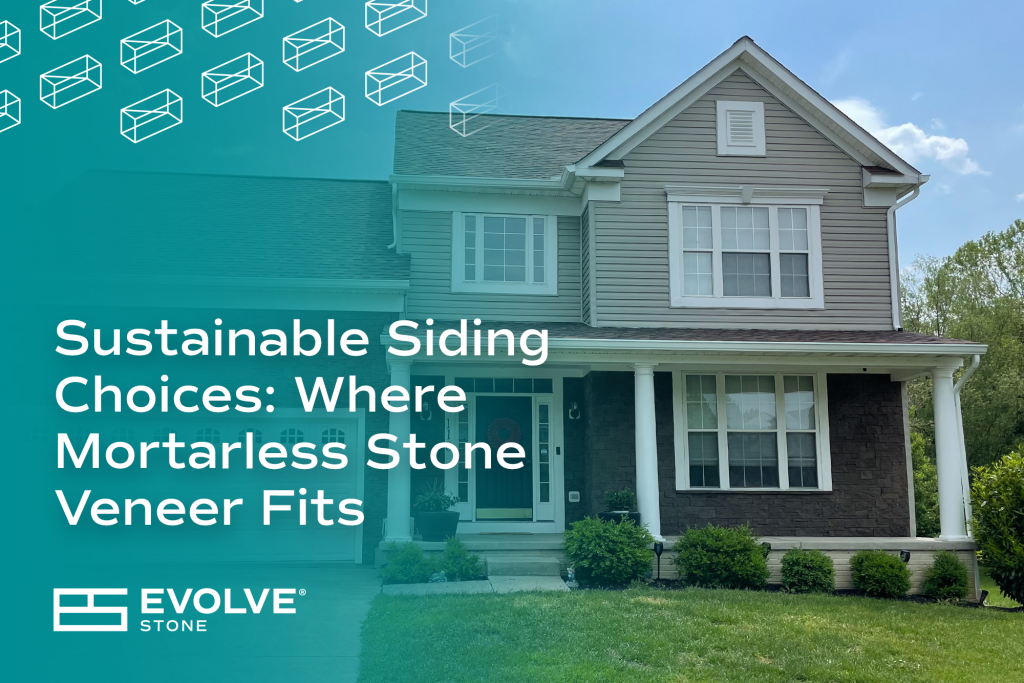
Modern architecture is undergoing a massive shift. Today, curb appeal is no longer just about aesthetics—it is about ethics. As the demand for sustainable exterior building materials reaches an all-time high, builders, architects, and homeowners are looking critically at the environmental footprint of their facades.
Your choice of siding does not just dictate how a building looks; it directly impacts the planet. From how raw materials are extracted to the energy required to transport them, a siding’s true environmental impact is complex. To accurately judge how “green” a material is, we have to look at its entire lifecycle: sourcing, manufacturing, transportation, installation, durability, and what happens to it when the building’s lifecycle ends. While options like fiber cement, engineered wood, and natural stone each bring something to the table, sustainable stone veneer—specifically modern, mortarless composite systems—is emerging as a uniquely balanced, eco-efficient contender.
What Makes a Siding Material Sustainable?
To understand where different cladding systems fall on the eco-friendly spectrum, we have to establish a baseline. A material isn’t sustainable just because it has a green label; it must perform efficiently across several key metrics.
Key Factors to Evaluate
- Embodied Carbon & Manufacturing Emissions: How much greenhouse gas is emitted during raw material extraction and production?
- Raw Material Sourcing: Are the materials renewable, recycled, or responsibly harvested?
- Transportation Requirements: Heavy materials require massive amounts of fossil fuel to move from the factory to the jobsite.
- Installation Waste: Does the installation process generate excessive jobsite scrap and chemical runoff?
- Lifecycle & Durability: A material that lasts 50 years with zero upkeep is inherently more sustainable than one that needs replacing or repainting every ten.
- Maintenance Needs: Frequent applications of chemical stains, paints, or sealants add to a building’s lifetime environmental footprint.
- Recyclability & Disposal: Can the material be repurposed at its end-of-life, or is it destined for a landfill?
Why Whole-Lifecycle Assessment Matters
It is easy to get caught up in upfront environmental claims, like a material being “100% natural.” However, holistic lifecycle thinking forces us to look deeper. If a natural material requires energy-intensive quarrying, global shipping, a high-waste installation process, and constant chemical maintenance, its initial “natural” advantage quickly evaporates. True sustainability requires looking at long-term performance and replacement cycles. Choosing a highly durable material that protects the building envelope for decades is one of the most effective ways to reduce a project’s total carbon footprint.
Comparing Common Sustainable Siding Options
To see where mortarless stone veneer fits, let’s look at how traditional siding options stack up against these sustainability metrics.
Fiber Cement
Fiber cement is a mix of wood fiber, sand, and cement. It is highly praised for its durability and fire resistance. However, its manufacturing process is incredibly energy-intensive, resulting in high upfront embodied carbon. Additionally, it is heavy to transport and cuts generate silica dust, requiring strict jobsite safety protocols and creating rigid installation waste.
Engineered Wood
Made from leftover wood fibers bound with resin, engineered wood utilizes renewable resources and acts as a carbon sink. It is relatively lightweight and easy to install. The tradeoff? It still requires periodic painting or staining to prevent moisture intrusion, meaning its lifetime maintenance footprint is higher than stone or masonry.
Vinyl Siding
Vinyl is incredibly lightweight, making it highly efficient to transport, and it requires virtually no maintenance. However, it is a petroleum-based product, raising concerns about fossil fuel reliance and chemical manufacturing emissions. Furthermore, despite recycling programs, the vast majority of construction-grade vinyl still ends up in landfills at the end of its lifecycle.
Natural Stone
Natural stone offers unmatched architectural beauty and can literally last centuries, making its lifespan unparalleled. However, the environmental cost of quarrying raw stone is severe. Because it is incredibly heavy, its transportation emissions are massive. It also requires highly specialized, labor-intensive masonry work, introducing substantial installation complexity and chemical mortar use.
Where Sustainable Stone Veneer Fits
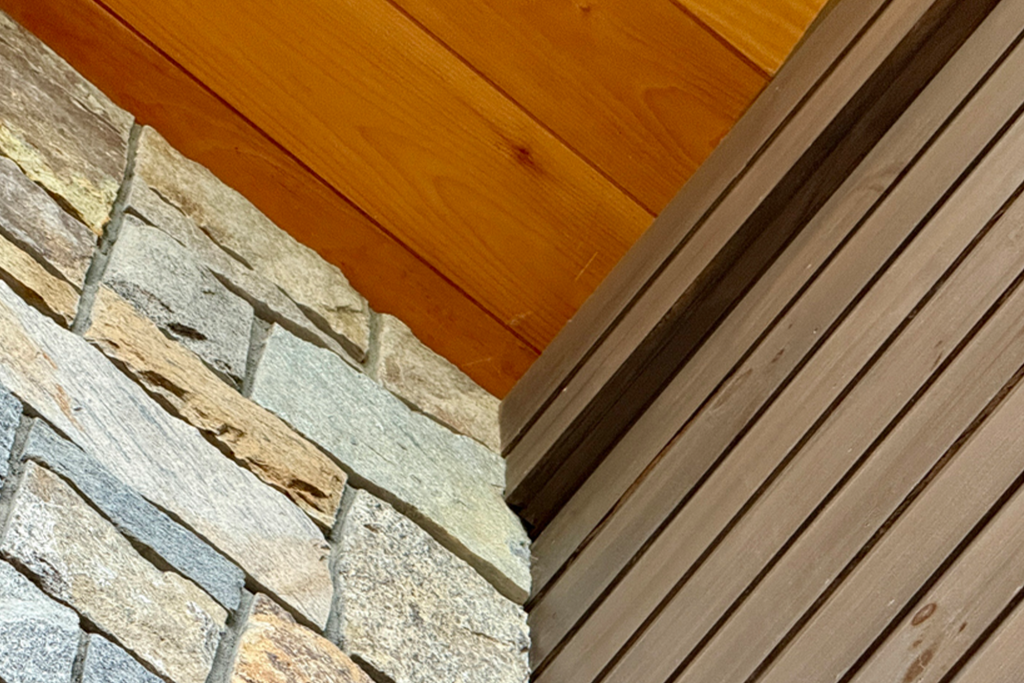
If natural stone is too heavy and fiber cement carries too much embodied carbon, where is the middle ground? This is exactly where sustainable stone veneer bridges the gap, offering the timeless look of real masonry without the architectural and environmental tax.
What Is Mortarless Stone Veneer?
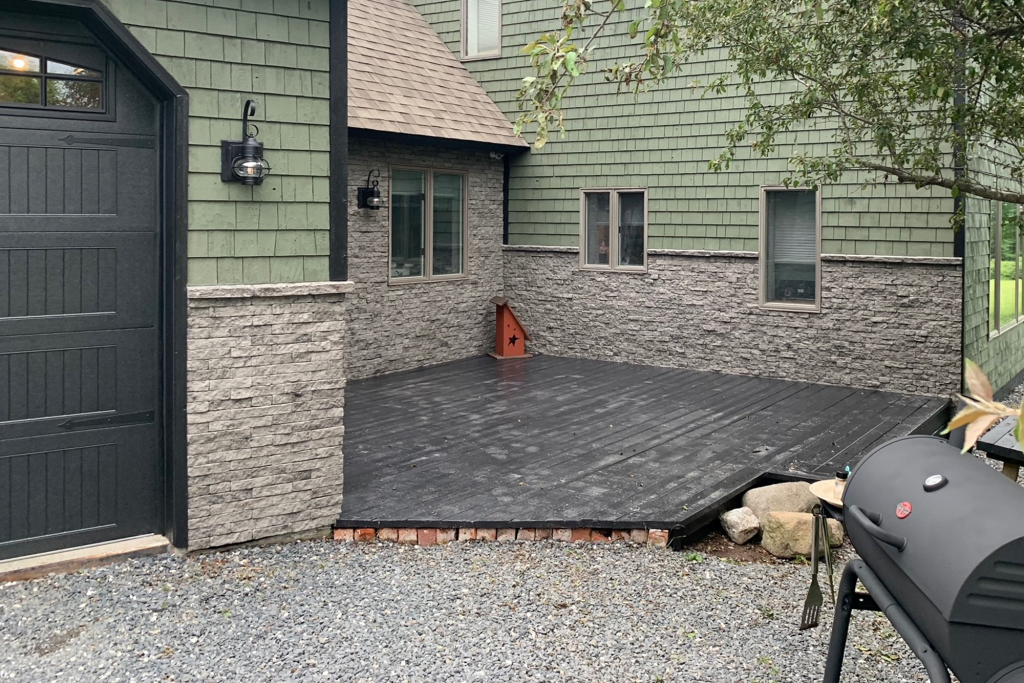
Unlike traditional stone slips that must be adhered to a wall one by one using wet mortar, modern mortarless stone veneer utilizes a panelized or individually placed stones. These advanced systems are engineered to structural dimensions and mechanical fasten directly to the substrate using standard finish screws or nails. It transforms stone from a specialized, messy masonry project into a clean, fast carpentry installation, making it highly viable for both residential developments and large-scale commercial facades.
Composite Materials and Resource Efficiency
By engineering stone look-alikes from advanced composite materials, manufacturers can drastically reduce raw resource consumption. Instead of blasting tons of rock out of a quarry, composite technology replicates the exact texture, coloring, and shadow lines of natural stone using a fraction of the raw material mass. This resource efficiency allows projects to achieve premium, high-end stone aesthetics without relying on full-bed masonry construction, preserving natural landscapes while reducing structural load requirements.
Lower Transportation Impact
One of the most immediate environmental wins of composite stone veneer is its lightweight design. Traditional stone requires flatbed trucks crawling under immense weight, capping shipping capacities long before a container is physically full. Lightweight composite veneer weighs a fraction of real stone or concrete-based manufactured stone. This weight reduction allows significantly more material to be shipped per truckload, drastically increasing shipping efficiency and slashing transportation-related carbon emissions.
Understanding Embodied Carbon in Stone Veneer Systems
Embodied carbon refers to the sum of all greenhouse gas emissions created during a material’s creation—from mining the earth to processing it in a factory.
Manufacturing Considerations
When analyzing a siding’s carbon footprint, the manufacturing process tells most of the story. Traditional clay bricks and concrete-based manufactured stones require massive, high-heat kilns running continuously to cure the product. Advanced composite stone veneers often utilize chemistry that cures without requiring extreme, fossil-fuel-driven thermal energy. When you pair this low-energy production with lightweight material extraction, the overall carbon footprint of a lightweight composite veneer system is significantly lower than its heavier, traditional masonry alternatives.
Installation Efficiencies
The environmental benefits don’t stop at the factory door; they carry right onto the jobsite:
- Eliminating Wet Mortar: Traditional stone installation requires mixing bags of mortar, which involves high water usage, chemical runoff, and empty paper bag waste. Mortarless systems eliminate cementitious mixing entirely.
- Accelerated Timelines: Because the panels nail or screw into place like traditional siding, installation timelines are cut down by up to 10x compared to traditional masonry, reducing jobsite energy consumption and labor footprints.
- Minimal Scrap Waste: Stone veneer systems are easily cut using standard woodworking tools, allowing scraps to be reused in corners or infills, minimizing construction waste on site.
Lifecycle Benefits of Mortarless Stone Veneer
Sustainability isn’t just about how a material starts; it’s about how it finishes. A building material’s long-term behavior determines its ultimate environmental return on investment. Mortarless stone veneer and other composite building products have a dramatically lower carbon footprint.
Long-Term Durability
A building envelope must withstand intense weather exposure, from scorching UV rays to freezing freeze-thaw cycles. Advanced composite stone veneers are engineered to be impervious to moisture. Unlike natural stone or concrete, which can absorb water, crack, and spall over time, composite stone maintains its structural integrity and colorfastness for decades. This extreme durability minimizes the frequency of building exterior replacement cycles, preserving resources over the building’s lifespan.
Low Maintenance Requirements
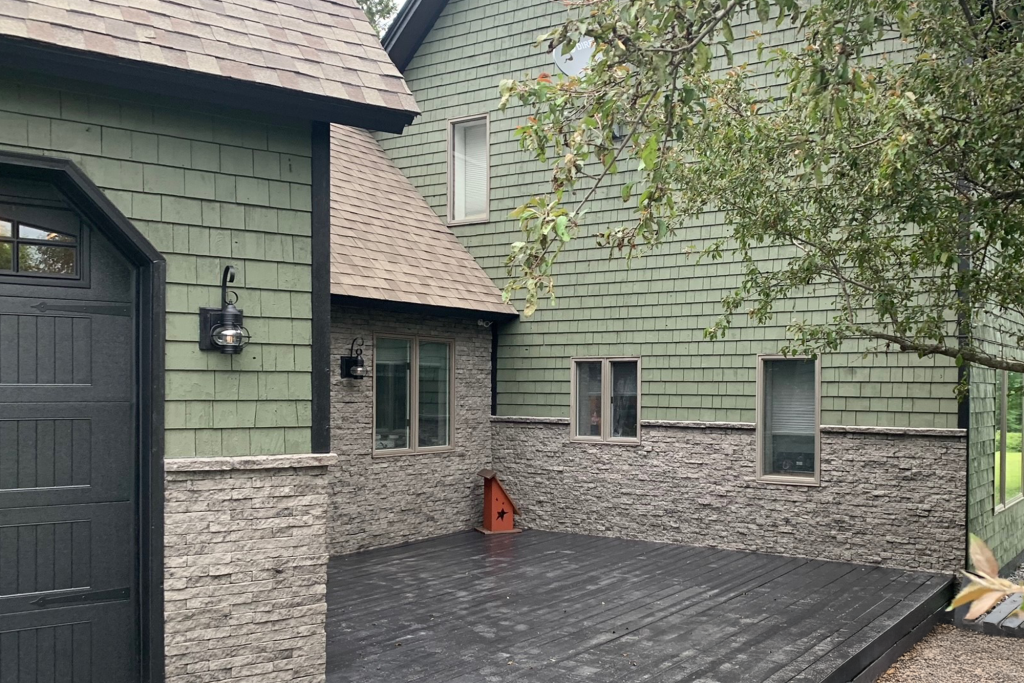
Many sustainable materials come with a catch: you have to maintain them constantly. Wood needs sealant; fiber cement needs paint. These ongoing maintenance cycles require a continuous influx of chemical products, transport, and labor over 30+ years. Mortarless stone veneer requires zero painting, zero sealing, and zero tuck-pointing. This absence of upkeep dramatically reduces its lifetime environmental impact, saving property owners thousands in operational costs.
Extending Building Lifecycles
The primary job of siding is to protect the building envelope. By acting as a highly durable, weather-resistant shield, composite stone veneer prevents moisture intrusion, rot, and structural decay within the wall cavity. By keeping the underlying framing bone-dry, it extends the overall lifecycle of the entire building, fulfilling the ultimate goal of sustainable architecture: making structures that last.
Recyclability and End-of-Life Considerations
What happens to a building when it faces renovation or demolition? In a true circular economy, materials should avoid the landfill.
Evaluating Material Recovery Potential
Traditional adhered stone veneer is virtually impossible to recycle. Because it is bonded permanently to concrete or plywood with mortar, tearing it down results in a smashed, contaminated mix of wood, mesh, stone, and cement that can only be discarded as mixed construction debris.
Because mortarless stone veneer is installed with mechanical fasteners (nails or screws), it can be neatly removed during future renovations. This clean, dry-fit removal process leaves the material un-contaminated, unlocking genuine potential for material recovery, architectural salvaging, and future recycling loops.
Reducing Construction Waste
Because mortarless stone panels are systematically engineered, architects can plan layouts precisely, ordering exactly what is required. Any scrap pieces generated during installation are clean and dry, making them far easier to collect and manage compared to wet mortar scraps and broken concrete masonry pieces. This clean deconstruction capability means future building renovations won’t automatically equal a dumpster full of non-biodegradable waste.
Choosing the Right Sustainable Cladding for Your Project
Selecting the ideal siding material is rarely a one-size-fits-all decision. It requires looking at your project’s unique variables through both an ecological and functional lens.
Questions to Ask Before Selecting a Material
Before finalizing your specification, sit down with your design team and ask these critical questions:
- What are our climate and performance requirements? Will the material face severe freeze-thaw cycles or extreme moisture?
- What are our core design objectives? Are we looking for a warm, organic aesthetic, or something sleek and ultra-modern?
- What are our jobsite installation considerations? Do we have access to master masons, or do we need a system that standard carpentry crews can install efficiently?
- What are the projected long-term ownership costs? Are we willing to budget for repainting and sealing every few years, or do we want a “set-and-forget” facade?
- What are our primary environmental priorities? Are we focusing on lowering upfront embodied carbon, reducing jobsite waste, or optimizing for a 50+ year building lifespan?
Balancing Sustainability and Aesthetics
Architects should never have to sacrifice their design vision to hit an environmental target. True sustainable design balances performance, longevity, and aesthetics seamlessly. If a building is beautiful but requires a toxic level of maintenance, it isn’t sustainable. Conversely, if a material is eco-friendly but visually unappealing, it won’t be widely adopted. Durability must always be the foundation of the conversation. By selecting materials that achieve premium, high-end stone aesthetics while simultaneously reducing structural load and installation waste, you hit the sweet spot where design meets responsibility.
Conclusion
When it comes to building exterior facades, no single siding material is universally the most sustainable across every single metric. Every project demands a careful balancing act. Making an eco-conscious decision requires looking past superficial marketing claims and deeply evaluating a material’s embodied carbon, lifecycle performance, transportation efficiencies, and end-of-life options. For projects that want the undeniable prestige and texture of masonry without its heavy carbon, logistical, and labor penalties, modern mortarless stone veneer offers a highly compelling path forward. By combining a lightweight composite construction with ultra-efficient installation and a zero-maintenance lifespan, it proves that you can build beautiful, enduring structures that respect both the environment and your bottom line. As you map out your next build, compare your cladding options not just by their upfront cost, but by how beautifully they align with your project’s long-term sustainability goals.
FAQs
Yes. Modern mortarless stone veneer can be a sustainable choice because it uses fewer raw materials than full-bed stone, reduces transportation emissions through lightweight construction, and minimizes installation waste.
Mortarless stone veneer eliminates the need for wet mortar, reducing water use, chemical runoff, and construction waste while enabling faster installation and lower jobsite resource consumption.
Stone veneer delivers the look of natural stone with significantly less weight, reducing transportation-related emissions and resource consumption while maintaining long-term durability and curb appeal.
No. Mortarless stone veneer requires little to no maintenance, eliminating the need for regular painting, sealing, or tuck-pointing that can increase a building’s lifetime environmental footprint.
Yes. Its lightweight design, efficient installation process, durability, and potential for material recovery during renovations can help support broader sustainability and green building objectives.