
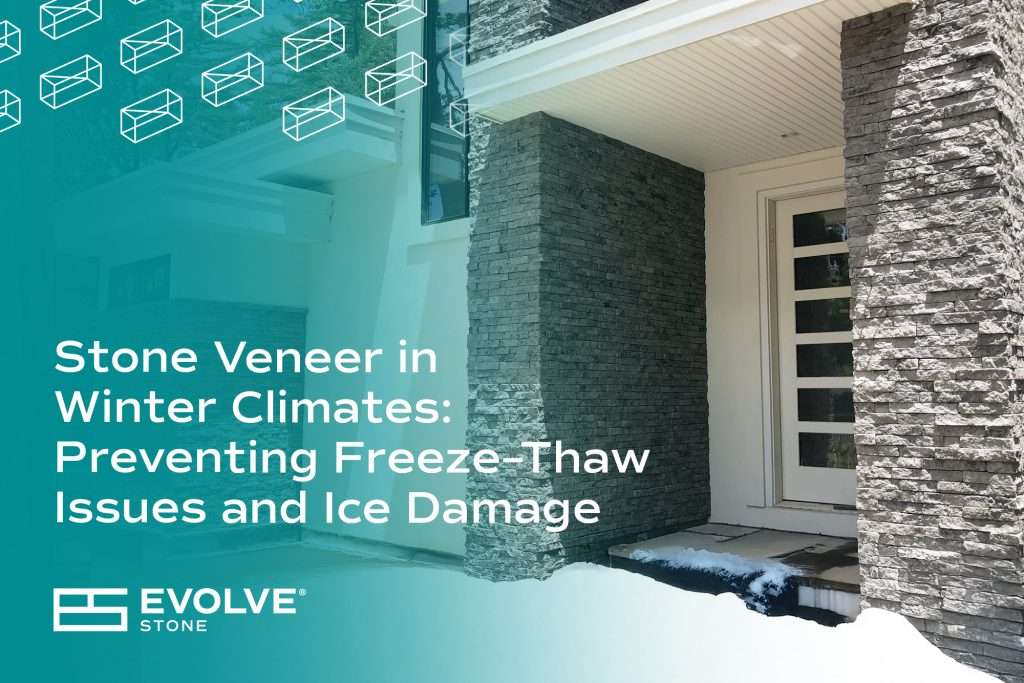
The beauty of natural stone veneer doesn’t have to be reserved for mild climates. However, in regions where temperatures routinely swing across the freezing point, standard building materials are put to the ultimate test. For any stone veneer cold climate application, the primary enemies are moisture and ice: moisture getting trapped behind the veneer, the repeated cycle of freezing and thawing, and the heavy burden of snow load.
Choosing the right stone veneer is just the first step. To ensure lasting performance, you must adhere to crucial fastening, clearances, and detailing strategies. These best practices are vital to helping your stone cladding system withstand repeated freeze–thaw cycles and the structural demands of a long winter.
How Can I Protect Stone Veneer from Freeze-Thaw Damage and Trapped Moisture?
When facing cold-climate conditions, managing moisture is the most critical factor. For conventional stone veneer, water penetrating and freezing behind the material can lead to cracking and eventual failure. Evolve Stone offers an advantage here, but proper installation is still paramount.
Our products are engineered to provide superior protection against the elements. Evolve Stone is moisture impermeable, meaning it will not hold water against the structure. This is a key defense against freeze-thaw damage compared to traditional veneer options. You can read more about how the material handles Water, Snow, and Ice in The Durability of Evolve Stone.
Even with an impermeable product, the wall assembly must manage bulk water. Ensure that proper air and moisture barriers are installed beneath the veneer. Effective drainage is achieved through the full wall system, ensuring that any water that penetrates the outer layer can escape efficiently without becoming trapped, which is often the precursor to ice dams forming within the wall cavity.
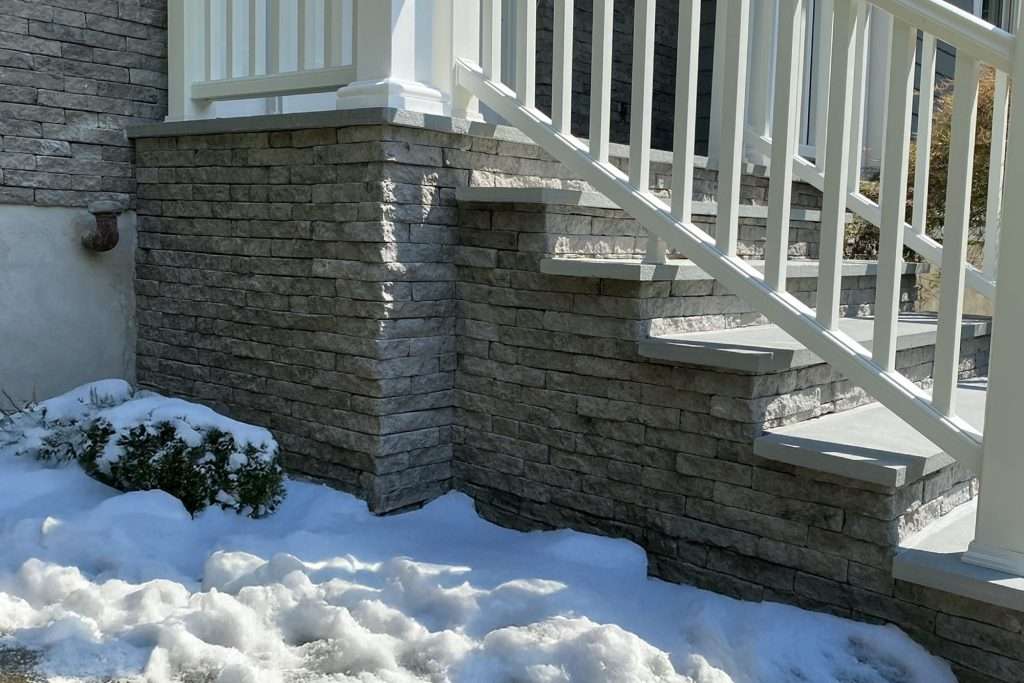
How Do I Ensure My Stone Veneer Withstands Snow Load and Thermal Movement?
The combined weight of heavy snow accumulation and ice, often referred to as snow load, places significant, continuous stress on exterior cladding. In addition, all building materials expand and contract with temperature changes, a phenomenon known as thermal movement.
The single most effective way to ensure your stone veneer can handle the elements is through mechanical attachment. Evolve Stone is designed as a nail-up system, which uses fasteners, not just adhesives, to secure the product directly to the substrate.
- Snow Load Resistance: The specified fastening pattern provides a mechanical bond that is robust enough to manage high snow load pressure without relying on the tensile strength of an adhesive, which can weaken in extreme cold.
- Thermal Movement Mitigation: Since the product is fastened, it is securely held in place even as the material undergoes thermal movement during temperature swings.
For specific requirements on the types of screws or nails to use, and the exact placement and spacing of fasteners, you must always consult the Official Installation Guide.
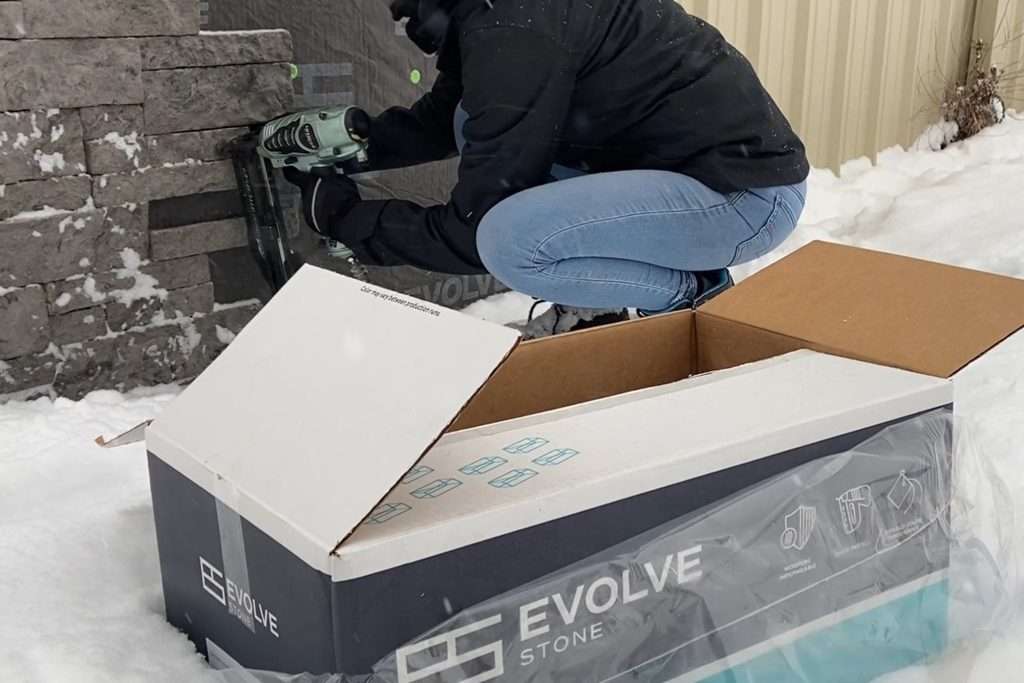
What Detailing and Maintenance Practices Ensure Cold-Climate Longevity?
No cladding system is truly waterproof; rather, it must be weather-managed. In a stone veneer cold climate environment, proper detailing is the difference between a long-lasting façade and one that suffers premature failure.
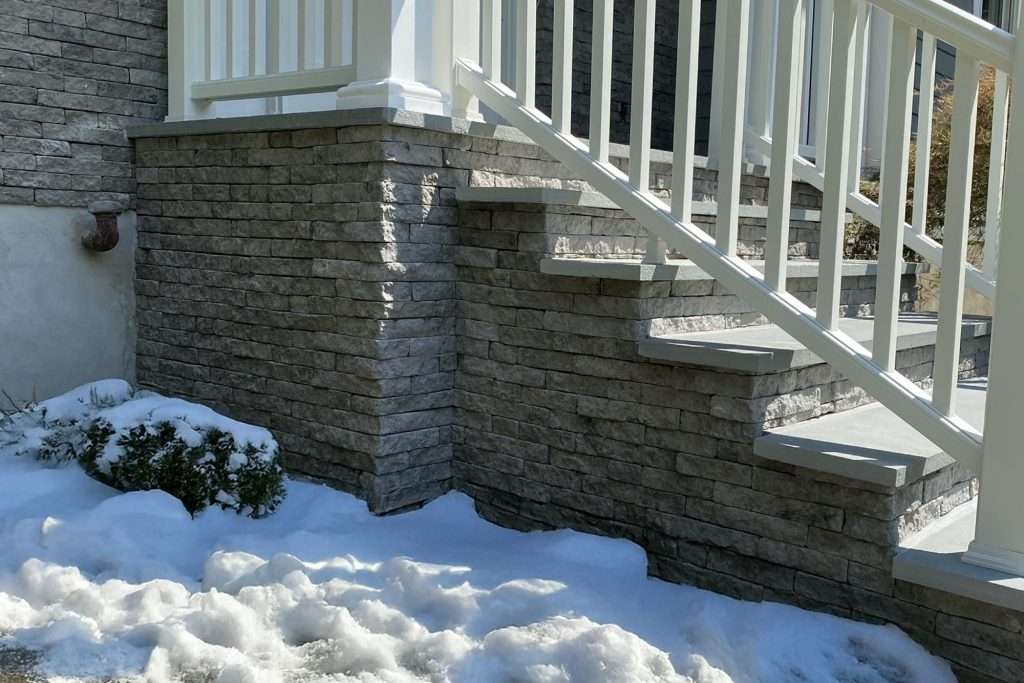
- Sills and Clearances: Sills and window trim must be detailed to ensure a generous downward slope, directing water away from the wall. Pay close attention to clearances—the distance between the stone and adjacent materials (like roofing, decking, or grade). Ensure these distances comply with local building codes and the manufacturer’s instructions to prevent moisture wicking or the accumulation of frozen water.
- Ice Dam Prevention: On any part of the wall where the roof meets the veneer, proper flashing and drainage are essential to managing meltwater. Failing to do so can result in the formation of ice dams that back up water into the wall structure, leading to catastrophic damage.
- Roof Snow Management: If the stone veneer is located directly below a roofline, consider snow guards to prevent large, heavy sheets of snow and ice from sliding off the roof and impacting the veneer.
Why is Proper Installation the Foundation of Cold-Climate Performance?
The performance characteristics that make Evolve Stone ideal for harsh winters, its moisture resistance, durability, and secure fastening method, are only guaranteed when the product is installed correctly.
Your installation is not just a cosmetic job; it is an engineering decision that ensures the wall can handle every freeze-thaw cycle, the crushing snow load, and decades of thermal movement.
This commitment to proper procedure is critical for protecting your investment. Installing the product without adhering to the published guidelines can reduce the coverage of your 50-Year Limited Warranty or potentially void it entirely. For the best long-term results in a challenging cold climate, always choose Evolve Stone and follow the official installation instructions to the letter.
FAQs
Freeze–thaw damage occurs when water becomes trapped behind veneer, freezes, expands, and forces cracking or displacement of the material.
Yes. Evolve Stone is moisture-impermeable and mechanically fastened, offering strong protection against freeze–thaw cycles and snow load when installed correctly.
Use proper WRBs, air barriers, and drainage systems to ensure water can escape the wall assembly rather than freeze behind the veneer.
Heavy snow and ice stress cladding systems. Mechanical fastening helps stone stay secure under fluctuating loads and cold-weather conditions.
Incorrect installation can compromise performance and reduce or void the 50-Year Limited Warranty. Always follow the published instructions and fastening patterns.