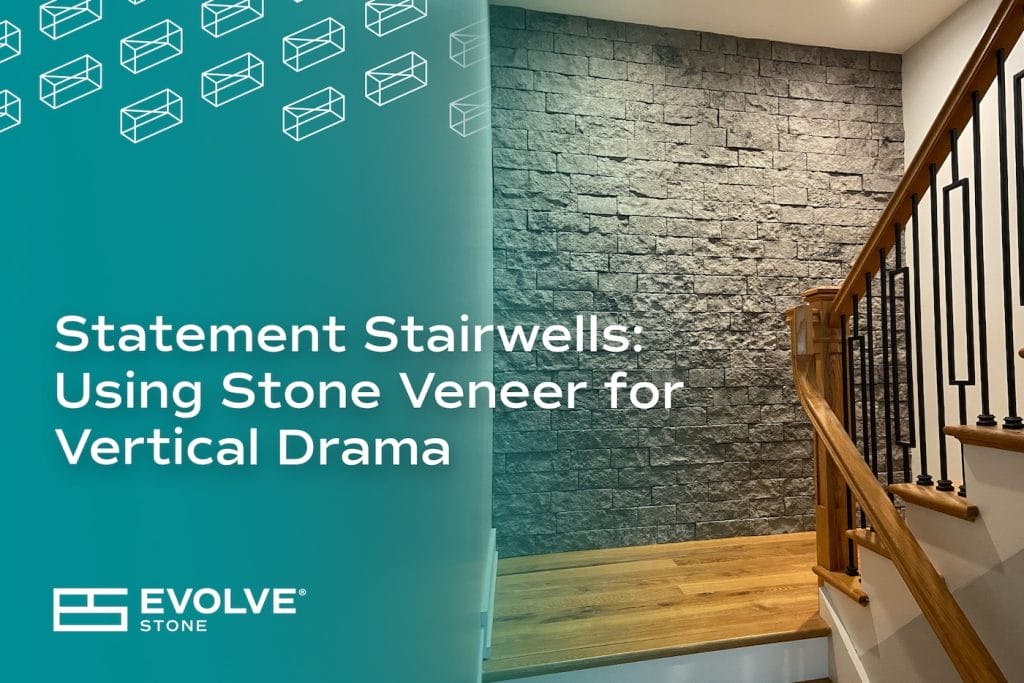
Stairwells are among the most visually interesting spaces in a home, yet they are often treated as little more than a connection between floors. Their height, changing sightlines and natural movement give them something many rooms do not have: built-in drama.
A stone veneer stairwell can take advantage of that vertical space, turning an otherwise overlooked wall into an architectural feature. Stone adds texture and dimension from the entry level to the upper landing while creating a surface that feels substantial enough for one of the busiest circulation areas in the home.
The key is designing for more than appearance. A successful stairwell accent needs to account for wall protection, lighting, installation details and the everyday traffic that comes with stairs and entries.
Why Stone Veneer Works So Well in a Stairwell
Most accent walls are viewed from a relatively fixed position. A stairwell is different.
You see the wall from below as you approach the stairs, at close range while climbing and from above as you reach the next floor. Natural and artificial light can also hit the surface from several angles throughout the day.
That makes texture particularly valuable.
Evolve Stone has previously highlighted stairwells, entryways and hallways as natural places to use stone veneer accent walls. Extending the veneer vertically can emphasize a two-story foyer, define an open staircase or give a narrow stair hall a stronger sense of architectural purpose.
Unlike a painted accent color, stone creates dimension that changes as you move through the space.
Start With the Architecture
Before choosing a stone style, look at how the stairwell is already organized. The best installations typically reinforce the existing architecture instead of competing with it.
Consider three common approaches:
- Full-height feature wall: Run stone from the lower floor to the upper landing to emphasize the height of an open stairwell or two-story foyer.
- Stair-run accent: Follow the wall beside the stairs for a more contained application that still adds significant visual interest.
- Landing focal point: Use stone at a landing where people naturally pause and where the wall can be seen from multiple levels.
In smaller spaces, limiting the veneer to one carefully chosen wall can often create more impact than surrounding the entire staircase.
For additional planning guidance, see how to choose the right stone veneer for an accent wall.
Match the Stone Scale to the Space
Stone profile matters in a stairwell because the wall is viewed both from a distance and at close range.
A few general design considerations can help:
For tall, contemporary stairwells
National True offers a more linear, uniform appearance that can complement modern and transitional interiors. Its horizontal lines can provide structure while the overall wall emphasizes vertical height.
For tighter stair halls
District View uses shorter stones with varied depths. The smaller scale can add texture without overwhelming a narrow stairway.
For a more organic appearance
Capital Sky combines varied heights and lengths, making it flexible enough for both traditional and contemporary spaces.
For larger entries and two-story foyers
Georgetown Run uses larger individual stones that can hold their own on expansive walls. Monument Gate is another option when the goal is a strong architectural statement.
You can compare these profiles and additional options within the full Evolve Stone Mortarless Series.
Use Lighting to Bring the Texture Forward
Lighting can dramatically change how a stone stairwell looks.
Because stone has depth, the direction of the light affects the shadows, contrast and visual texture across the wall. Instead of relying only on general stair lighting, consider how accent lighting can work with the veneer.
Lighting strategies to consider
- Wall washing: Provides more even illumination across a broad surface.
- Grazing light: Places the light source closer to the wall, creating stronger highlights and shadows across the texture.
- Downlighting: Works well from upper landings or high ceilings.
- Uplighting: Can reinforce the vertical height of a two-story stairwell.
- Adjustable accent lighting: Allows specific sections or architectural details to become focal points.
One important distinction is the angle of the fixture. Light aimed directly at the wall can flatten the appearance of the stone, while a lighting wash or grazing angle can reveal more variation in the surface.
For a deeper look at these techniques, explore Evolve Stone’s guide to stone veneer accent wall lighting.
Design for a High-Traffic Space
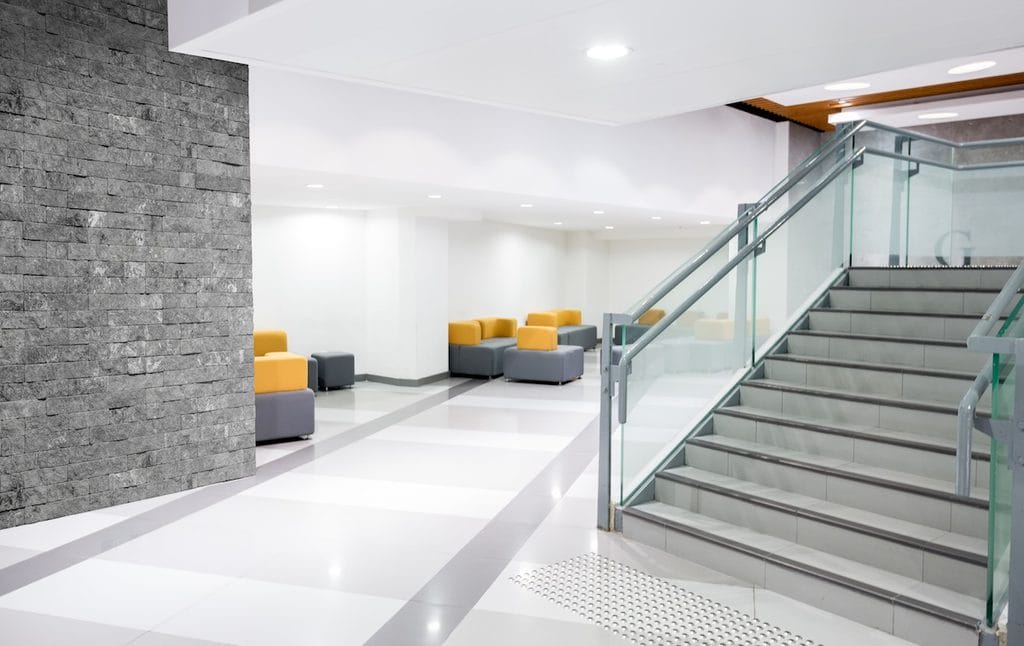
Stairwells and entries experience more everyday contact than many decorative walls.
Furniture gets carried upstairs. Backpacks and bags brush against surfaces. Shoes, luggage and household items may occasionally make contact with lower portions of the wall.
That means durability and maintenance should be part of the design conversation from the beginning.
Pay particular attention to:
- Lower sections of the stair wall
- Landings where people change direction
- Outside corners
- Areas beside doors or entryways
- Walls near handrails
- Narrow sections where furniture is frequently moved
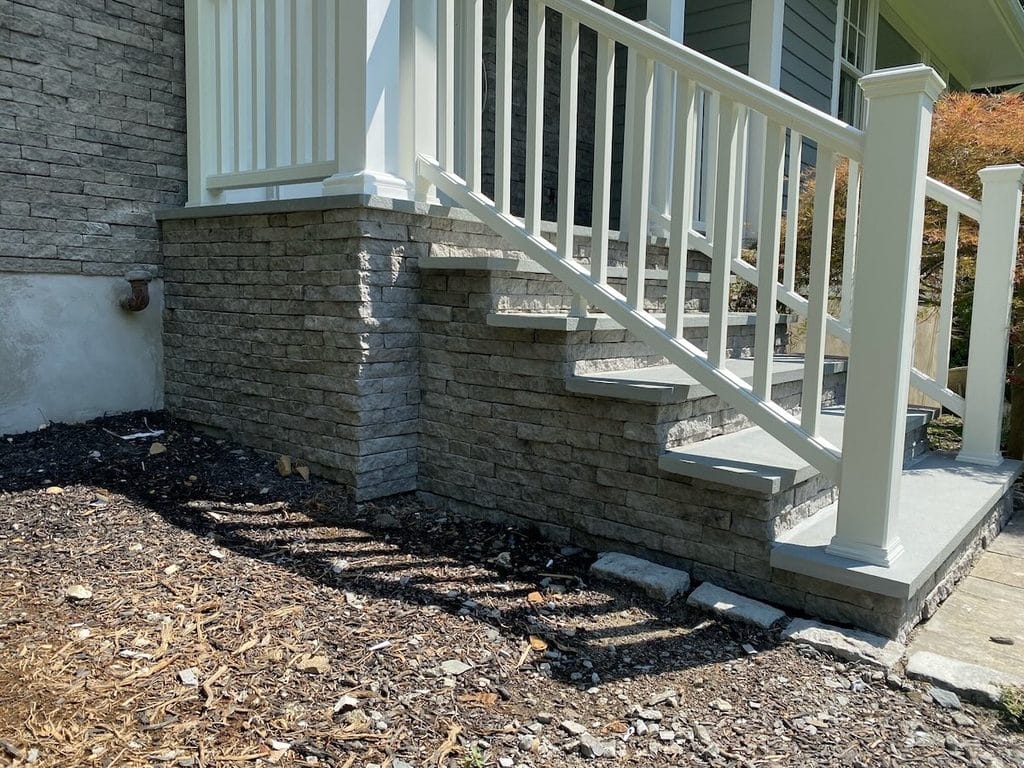
Evolve Stone uses a color-throughout proprietary material rather than relying only on a surface-applied finish. The product is also designed for both interior and exterior applications.
Still, no decorative wall surface should be treated as maintenance-free.
For routine care, Evolve Stone recommends Dawn dish soap and a soft-bristled brush rather than harsh chemical cleaners. More detailed guidance is available in Maintaining Your Stone Veneer Accent Wall.
Think Beyond Scuff Resistance
When selecting a finish for a busy stairwell, “scuff resistance” is only one part of the discussion.
Consider the entire lifecycle of the wall:
- How noticeable will everyday marks be?
- How easy is the surface to clean?
- What happens if a corner receives an impact?
- Will minor wear stand out against the finish?
- Can individual areas be repaired if needed?
These practical considerations can help homeowners compare stone with alternatives such as paint or wallpaper.
For more on that comparison, read Stone Veneer vs. Wallpaper: Which Is Better for Accent Walls?.
Protect Corners and Transitions
Corners often receive more abuse than the middle of a wall, especially in stairways.
Plan edge conditions before installation so the finished wall feels intentional rather than improvised.
Important details include:
- Outside corners
- Wall-to-wall transitions
- Areas where stone meets drywall
- Handrail attachment points
- Light switches and outlets
- Stair trim and base details
- Upper and lower termination points
Where appropriate, corner components can help create a more finished appearance and avoid leaving exposed cut edges.
Handrail locations should also be coordinated before the veneer is installed so attachment points, required clearances and supporting structure are accounted for.
In code-regulated stairways, confirm that the finished wall assembly does not interfere with required stair width, handrail clearance, guards, switches or other applicable requirements.
Take Advantage of Mortarless Installation
A stairwell is not an easy place for messy construction.
Treads, railings, finished floors and nearby walls all need protection, and access can become increasingly difficult as the project moves higher.
Evolve Stone’s mortarless installation system helps simplify that process. The lightweight manufactured stone veneer can be installed using standard woodworking tools and, for many interior applications, mechanically fastened with a finish nailer.
Compared with traditional mortared veneer, this can reduce:
- Wet mortar work
- Jobsite mess
- Installation complexity
- Specialized masonry tools
- Disruption around finished interior surfaces
Interior applications are also typically simpler from a wall-assembly standpoint because protected interior walls generally do not require the WRB and rainscreen components associated with exterior installations.
The substrate still matters. The wall needs to provide an appropriate, secure fastening surface, and installers should follow Evolve Stone’s current installation requirements for the specific application.
Plan the Layout Before Installation Starts
Stairwells contain angles and transitions that make layout especially important.
Before installing the first piece, consider:
- Where the most visible full stones should appear.
- Where cut pieces can be least noticeable.
- How courses will interact with the stair angle.
- How the veneer will terminate at ceilings, landings and adjacent walls.
- Where handrails, lighting and electrical components will interrupt the surface.
One advantage of Evolve Stone’s mechanically fastened system is greater flexibility in installation sequence. Depending on the application, installers can work from the bottom up or top down, making it easier to place cuts where they will attract less attention.
A Quick Stairwell Design Checklist
Before committing to a stone veneer stairwell, ask:
- Which wall has the strongest sightline from the entry?
- Will the stone run one story or multiple stories?
- Is the stone profile appropriately scaled for the space?
- Where are the highest-contact areas?
- Are outside corners adequately planned?
- How will the handrail interact with the veneer?
- Will lighting wash, graze or directly illuminate the surface?
- Is the substrate appropriate for mechanical fastening?
- Where will cuts and termination points occur?
- Have you viewed the stone under the actual lighting conditions?
That last point is especially important. Color and texture can change considerably depending on daylight, fixture temperature and viewing angle.
Turn a Passageway Into a Destination
The best stairwells do more than move people between floors. They contribute to the experience of the entire home.
A thoughtfully designed stone veneer stairwell can create an immediate impression from the entry, introduce texture into an otherwise simple circulation space and connect multiple levels with one continuous architectural material.
Start with the architecture. Choose a stone profile that fits the scale of the space. Use lighting to reveal the texture. Then plan for the traffic, corners and transitions that come with everyday use.
The result is a stairwell that no longer feels like leftover wall space. It becomes one of the home’s defining features.
Explore Evolve Stone styles and colors, or order samples to see how different textures and tones respond to the lighting in your stairwell. If you would rather work with someone experienced with Evolve Stone installation, use the Find a Dealer tool to connect with a Preferred Pro in your area.