
Stone veneer is designed to provide long-lasting exterior performance, but like any building material, problems can develop when installation details, moisture management, substrate conditions, or maintenance are overlooked.
The visible issue is not always the source of the problem. A loose panel could point to a fastening issue. Discoloration may result from environmental buildup, moisture, or another material transferring onto the stone. A water stain could originate several feet away from where it finally becomes visible.
Effective stone veneer troubleshooting starts by identifying the cause before making a repair. Understanding the most common warning signs can help contractors, builders, and property owners determine whether a problem is cosmetic, isolated, or part of a larger wall-system concern.
Start Stone Veneer Troubleshooting With the Cause, Not the Symptom
When a problem appears, it can be tempting to repair only what is visible. That may improve the appearance temporarily, but it will not necessarily prevent the issue from returning.
Before beginning a repair, consider a few basic questions:
- Where is the problem located?
- When did it first appear?
- Does it change after rain, snow, or freezing temperatures?
- Are windows, doors, rooflines, penetrations, or material transitions nearby?
- Is the issue isolated to one piece of veneer or visible across a larger section of the wall?
These details can help determine whether the concern involves the veneer itself, the installation, or another part of the wall assembly.
In many cases, proper diagnosis is more important than the repair technique. Fixing the underlying cause first can help prevent repeat problems.
Problem #1: Loose Stone Veneer Panels
Movement, visible gaps, or individual pieces pulling away from the wall should be investigated rather than ignored.
Loose panels can have several possible causes, including:
- Incorrect fastener type
- Improper fastener placement
- Fasteners that do not adequately engage the supporting material
- Substrate problems
- Wall movement
- Installation issues around edges or transitions
With mechanically fastened systems, reviewing the original fastening approach is an important first step. Evolve Stone provides guidance on proper stone veneer installation through its installation resources, including requirements related to fastening and substrate conditions.
If only one piece is affected and the wall behind it is in good condition, a localized repair may be possible. If multiple pieces are loose, the broader installation should be inspected before individual panels are simply reattached.
Repeated loosening can indicate that the problem is not limited to the veneer itself.
Problem #2: Efflorescence or White Deposits
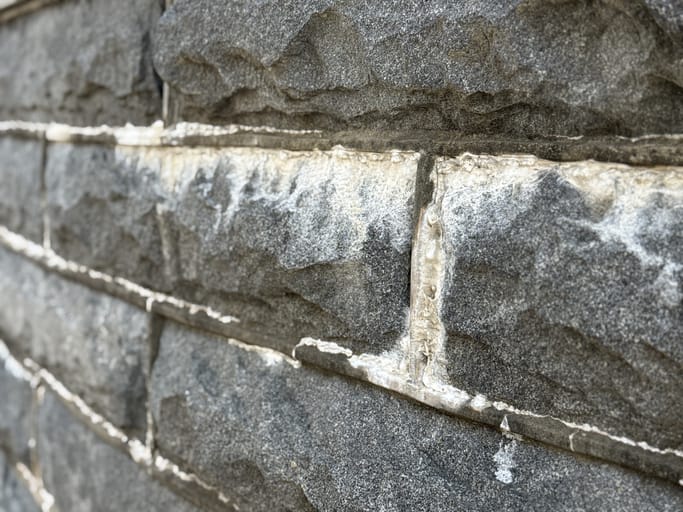
White or powdery deposits on stone or masonry surfaces may be efflorescence.
Efflorescence occurs when moisture moves through materials containing soluble salts. As the moisture reaches the surface and evaporates, mineral deposits can remain behind.
The appearance may be primarily cosmetic, but it can also provide an important clue that moisture is moving through or around the wall assembly.
Before cleaning the affected area, look for possible moisture sources such as:
- Poor drainage
- Improper flashing
- Persistent water exposure
- Leaking penetrations
- Areas where moisture could become trapped
Cleaning the surface without addressing the source of moisture may allow the efflorescence to return.
Routine mortarless stone veneer maintenance can help identify staining, drainage concerns, or minor damage before they develop into larger repair needs.
It is also important not to assume that every white mark is efflorescence. Dirt, construction residue, mineral-rich water, or other contaminants can create similar appearances. Identify the source before choosing a cleaning or repair method.
Problem #3: Water Leaks Behind or Around Stone Veneer
A visible leak does not necessarily originate directly behind the area where water appears.
Water can enter higher on a wall, travel along building materials, and become visible somewhere else entirely. This makes water intrusion one of the more challenging stone veneer problems to diagnose.
Potential sources of water leaks can include:
- Window and door openings
- Roof-to-wall intersections
- Improper flashing
- Gaps in the water-resistive barrier
- Utility penetrations
- Exterior fixtures
- Material transitions
- Blocked drainage locations
The stone veneer itself should not automatically be assumed to be the source.
Exterior cladding is part of a larger wall system designed to control and drain moisture. If recurring water intrusion is present, the water-resistive barrier, flashing, drainage plane, penetrations, and rainscreen conditions should all be evaluated.
Our guide to stone veneer moisture management provides a deeper look at how housewraps, flashing, rainscreens, drainage, and penetration sealing work together behind the finished veneer.
Correcting the leak path is essential before repairing any resulting cosmetic or material damage.
Problem #4: Stone Veneer Discoloration and Staining
Not every change in appearance indicates a product failure.
Discoloration can develop for several reasons, and identifying the type of stain is important before attempting to remove it.
Dirt and Environmental Buildup
Dust, pollen, soil, landscaping debris, and airborne contaminants can gradually accumulate on an exterior surface.
Areas near grade may experience additional splashback from rain, while protected sections of a wall may accumulate dirt differently than areas regularly washed by rainfall.
These issues are typically cosmetic, but the correct cleaning method should still be used.
Moisture-Related Staining
Persistent dark areas, streaking, or staining can sometimes indicate repeated water exposure.
Check nearby flashing, drainage paths, gutters, rooflines, windows, and penetrations to determine whether water is consistently being directed over or behind the affected area.
A stain that repeatedly returns after cleaning may require additional investigation.
Rust and Material Transfer
Metal fixtures, fasteners, flashing components, or nearby architectural features can sometimes contribute to staining if runoff travels across the stone.
Before attempting to remove any discoloration, identify what caused it.
Following manufacturer recommendations for how to clean stone veneer safely is preferable to using aggressive acids, harsh chemicals, wire brushes, or high-pressure washing that could damage the finish.
Problem #5: Cracked, Chipped, or Damaged Stone Veneer
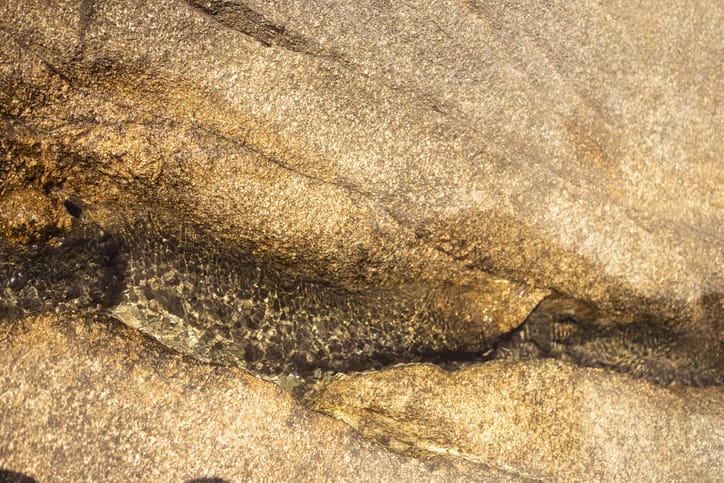
Physical damage can occur from impacts, construction activity, landscaping equipment, severe weather, or other external forces.
When inspecting a cracked or chipped piece, determine whether the damage is isolated.
Look at the surrounding area for signs such as:
- Cracks affecting multiple pieces
- Movement at joints or corners
- Loose veneer
- Changes in the wall surface
- Moisture intrusion near the damaged area
A single damaged piece caused by an impact may simply require replacement.
Recurring cracks or damage spread across multiple pieces could indicate movement in the wall assembly or another underlying condition. In that case, replacing individual pieces without determining the cause may result in repeated repairs.
Problem #6: Gaps Around Corners, Openings, and Transitions
Corners, windows, doors, rooflines, and transitions between materials are some of the most detail-intensive portions of an exterior wall.
They are also common areas for installation issues to become visible.
A gap may be cosmetic, but it can become more important if it exposes part of the underlying wall system or creates a potential path for water.
Inspect gaps around:
- Outside corners
- Windows and doors
- Sills
- Roof-to-wall intersections
- Utility penetrations
- Transitions between stone and other siding materials
Determining whether the issue affects only appearance or compromises the moisture-management system will help establish the appropriate repair.
How Moisture Problems Can Create Multiple Stone Veneer Symptoms
Moisture-related problems do not always present themselves as an obvious leak.
Depending on the wall assembly and conditions, excess moisture may contribute to several symptoms, including:
- Efflorescence
- Persistent discoloration
- Water staining
- Damage to surrounding building materials
- Loose components
- Recurring repair needs
That is why moisture should be considered when multiple symptoms appear in the same area.
Exterior walls are generally designed so incidental moisture can drain and the assembly can dry. Problems with flashing, the water-resistive barrier, drainage paths, penetrations, or rainscreen details can disrupt that process.
Treating only the visible stain or damaged piece may leave the underlying moisture condition unresolved.
Repair or Replace? How to Decide
Not every stone veneer problem requires a large-scale repair.
Localized stone veneer repairs may be appropriate when:
- Only one or a few pieces are affected.
- The substrate remains sound.
- There is no evidence of widespread moisture intrusion.
- The cause has been identified.
- Replacement pieces can be properly integrated into the existing installation.
A more extensive inspection may be appropriate when:
- Multiple panels are loose.
- Water leaks repeatedly.
- Staining returns soon after cleaning.
- Damage covers a large section of the wall.
- The substrate may be compromised.
- Cracking or movement continues to develop.
The key distinction is whether the problem is isolated or a symptom of a larger installation or wall-system condition.
Preventing Stone Veneer Problems Before They Start
Many stone veneer repairs can be avoided through careful planning and installation.
Good preventive practices include confirming substrate compatibility, following manufacturer fastening requirements, properly integrating flashing and water-resistive barriers, protecting drainage paths, and paying close attention to wall openings and penetrations.
Regular visual inspections can also help.
Watch for changes such as new gaps, staining, damaged pieces, loose veneer, or water accumulating in unexpected areas. Small issues are generally easier to investigate before they affect a larger portion of the wall.
Following installation instructions and addressing concerns early can contribute to better long-term performance.
Why Mortarless Installation Can Simplify the Process
Traditional adhered stone veneer relies on mortar and masonry techniques to attach the veneer to the wall.
Evolve Stone mortarless stone veneer uses mechanical fastening instead. The system is designed for installation with common tools, helping simplify the process compared with traditional masonry installation.
That difference can also be helpful when investigating certain repair situations because the fastening method is easier to understand and inspect than a concealed mortar bond.
However, a mechanically fastened system does not eliminate the need for proper diagnosis.
If a panel becomes loose, water intrusion is present, or the substrate has been affected, the underlying cause should still be identified before replacing or reattaching veneer.
The goal of any repair should be to restore both the appearance of the wall and the conditions needed for long-term performance.
Know When to Bring in a Professional
Some stone veneer concerns can be addressed through routine cleaning or localized repair. Others deserve professional evaluation.
Consider contacting a qualified contractor or building professional when dealing with:
- Recurring water leaks
- Large areas of loose veneer
- Suspected structural movement
- Significant substrate deterioration
- Extensive cracking
- Leak sources that cannot be identified
- Damage that continues to return after repairs
The earlier the actual cause is identified, the less likely it is that the same problem will need to be repaired repeatedly.
Stone veneer troubleshooting is ultimately about looking beyond the surface. Loose panels, efflorescence, discoloration, water leaks, and physical damage each provide clues about what may be happening within the installation or wall assembly. Addressing those clues systematically can help determine the right repair and support better performance for years to come.
FAQs
Loose stone veneer may result from incorrect fastening, substrate conditions, wall movement, or other installation issues. Inspect the affected area and determine why the attachment failed before simply reattaching the veneer.
Efflorescence occurs when moisture transports soluble salts through masonry-related materials. When the moisture evaporates, white mineral deposits can remain on the surface. Recurring efflorescence may warrant investigation into the source of moisture.
Yes. Exterior wall assemblies are designed to manage incidental moisture that can get behind cladding. Problems with flashing, water-resistive barriers, penetrations, or drainage paths can contribute to water intrusion if the wall is not properly detailed.
The repair depends on the type and cause of the damage. Individual damaged pieces may sometimes be replaced, but loose veneer, recurring cracks, or water-related damage should be diagnosed before repairs begin.
Stone veneer discoloration can result from dirt, pollen, moisture, runoff, mineral deposits, rust, or other environmental contaminants. Identifying the source of the staining is important before selecting a cleaning method.