
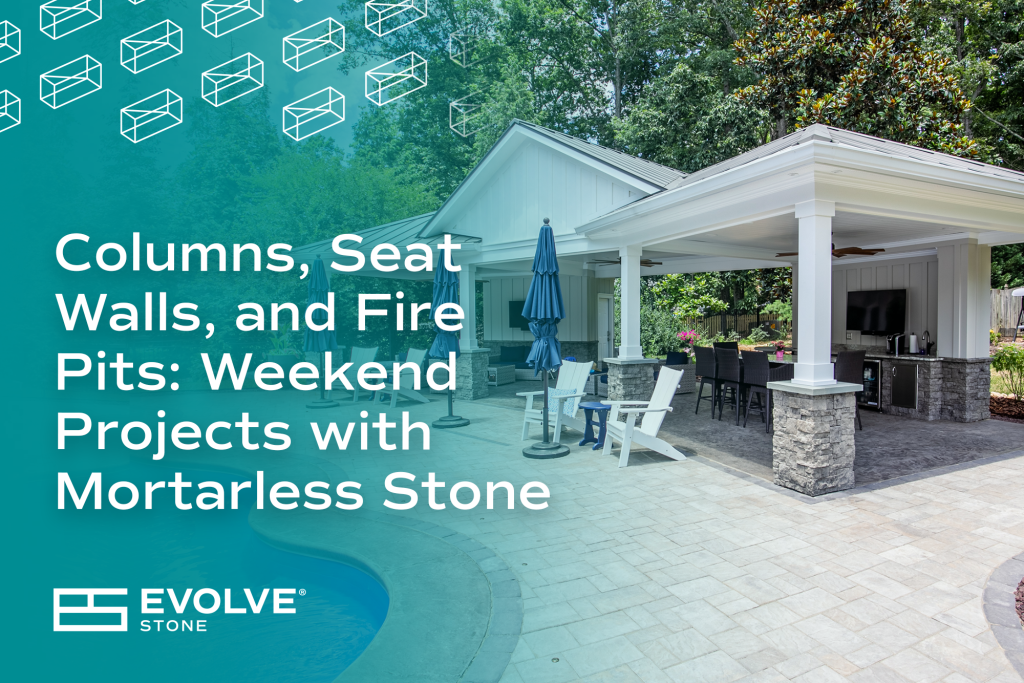
Outdoor living spaces have evolved from simple concrete pads to sophisticated extensions of our homes. While a full outdoor renovation can cost tens of thousands of dollars, there is a “sweet spot” in home improvement: high-impact, weekend-scale projects that use stone to create a sense of permanence and luxury.
Traditionally, working with stone meant mixing mortar, using specialized wet saws, and dealing with significant weight. However, the rise of mortarless stone veneer has changed the game for DIY stone veneer projects. Now, you can build professional-grade features—like columns, piers, and seat walls—using standard woodworking tools.
Here are three weekend projects that add massive perceived value to your backyard without the complexity of traditional masonry.
The Entry Pier: Defining Your Space
Freestanding stone columns or piers are the ultimate way to frame a driveway, a porch, or the entrance to a backyard patio. They provide a sense of “estate” quality and serve as the perfect base for outdoor lanterns.
The Strategy
Instead of stacking heavy blocks, build a simple 2×4 or 3/4″ exterior-grade plywood frame (the “core”). Once your wooden box is secure and level, you apply the stone veneer directly to the substrate.
Project Essentials & Cut List
- The Core: Four 4×4 treated posts (for height) or a 24″ x 24″ plywood box.
- The Stone: Approximately 16–20 sq. ft. of Evolve Stone per 4-foot column.
- The Finish: One 26″ x 26″ concrete or natural stone cap stone.
- Tools: Circular saw with a finishing blade, level, and a finish nailer.
The Integrated Seat Wall: Functional Luxury
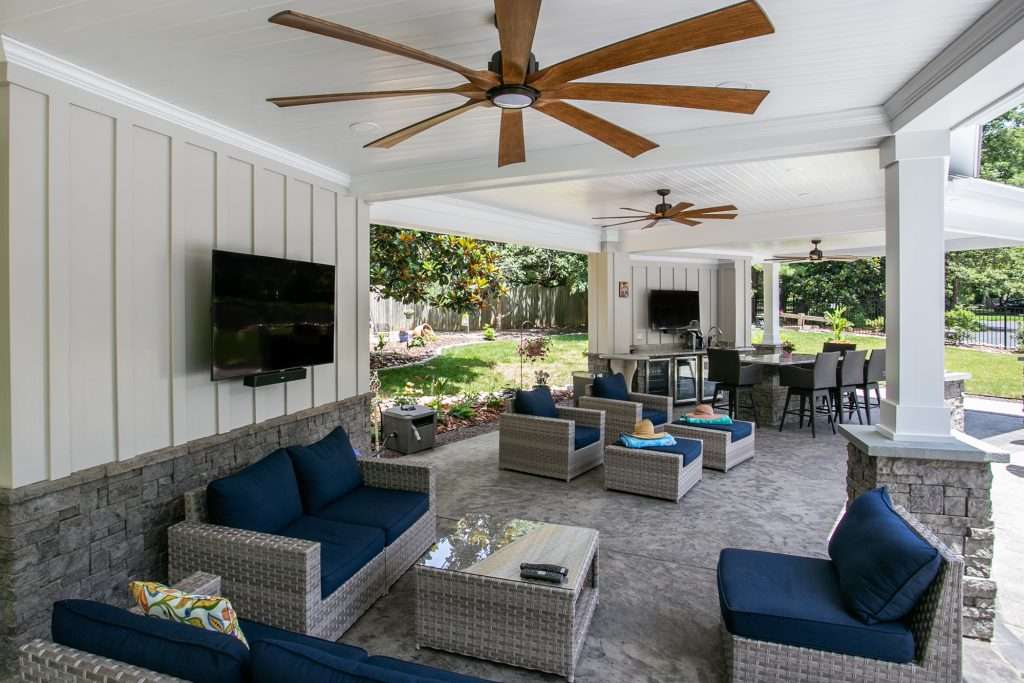
A seat wall does double duty: it defines the perimeter of your patio and provides permanent, overflow seating for guests. By adding stone veneer to a simple pressure-treated wood frame, you create a feature that looks like it took a mason a week to build.
The Strategy
Build a long, rectangular “bench” frame using 2x4s and 1/2″ cement board or exterior plywood. Ensure the height is roughly 18 inches—the standard comfortable height for seating.
Project Essentials & Cut List
- The Frame: 2×4 pressure-treated lumber (spaced 16″ on center).
- The Face: 1/2″ CDX Plywood or Cement Board.
- The Stone: Calculate the linear footage multiplied by the 1.5-foot height.
- The Top: 12″ wide flagstone or wood-plank seating.
Pro Tip: If you’re adding this to an existing outdoor kitchen area, match the stone profile to your grill island for a cohesive, “built-in” look.
The Non-Combustible Fire Pit Surround
Note: Stone veneer should never be used in the direct path of the flame. It is intended for the exterior decorative surround.
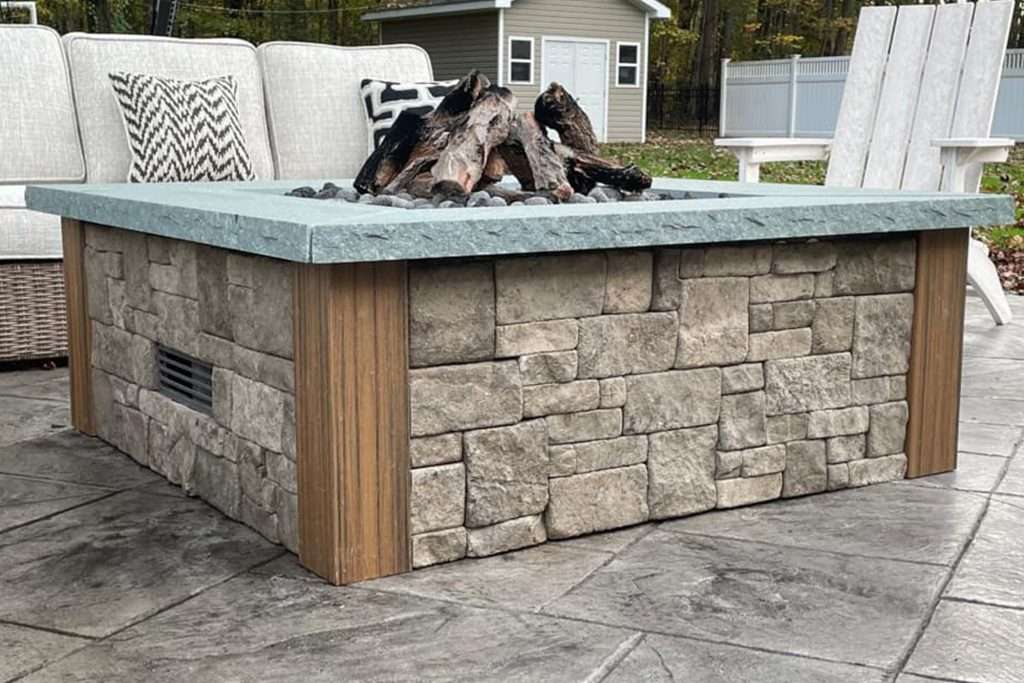
A stone-clad fire pit is the heart of any backyard. By using a metal fire pit insert (the “liner”), you can use stone veneer on the exterior to create a custom look that matches your home’s architecture.
The Strategy
Start with a pre-made metal fire ring. Build a circular or square frame around it with a 6-inch air gap between the metal liner and your framing. Cover the frame in cement board, then apply your mortarless stone.
Project Essentials & Cut List
- The Liner: 30″ heavy-duty steel fire ring.
- The Substrate: 1/2″ Permabase or WonderBoard (cement-based).
- The Stone: Roughly 12–15 sq. ft. depending on the diameter.
- The Cap: Large-format cap stones or trapezoidal masonry units to ring the top.
Why Mortarless Stone is the DIYer’s Secret Weapon
The primary barrier to DIY masonry has always been the “wet” nature of the work. Mortar is messy, weather-dependent, and requires a steep learning curve to get right.
Evolve Stone removes these hurdles:
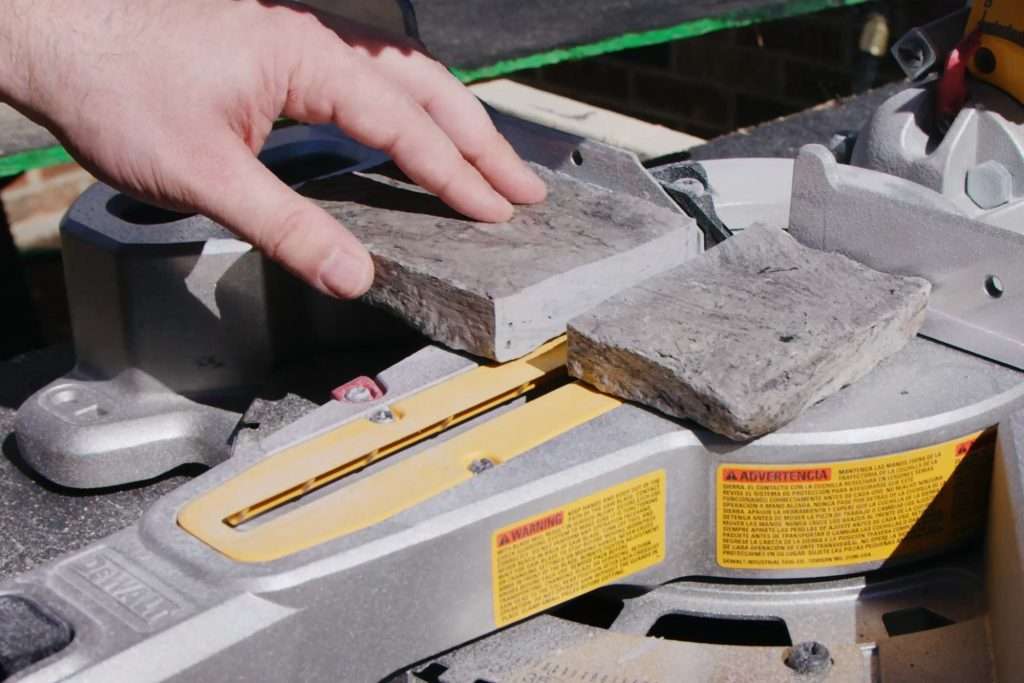
- Speed: You can “nail” the stone into place. A project that would take a mason two days can be finished in four hours.
- No Specialized Tools: If you have a miter saw and a nail gun, you are already equipped.
- Lightweight: You don’t need a reinforced concrete footer for most of these small projects, as the stone doesn’t add the crushing weight of traditional rock.
Finishing for Success
To make your weekend project look like it was done by a pro, pay attention to the corners. Use specialized corner pieces rather than trying to butt-joint flat stones at a 90-degree angle. This creates the illusion of full-depth masonry.
Finally, always finish your columns and seat walls with a substantial cap stone. Not only does this protect the interior of your frame from rain, but it provides the visual “weight” needed to make the project look authentic.
Whether you’re framing your driveway or building a cozy spot for a bonfire, these stone features offer the highest return on investment for your time and effort. Pick a weekend, grab your nailer, and start building.
FAQs
Columns, seat walls, and fire pit surrounds are ideal beginner projects because they use simple framing techniques and manageable surface areas.
Yes, mortarless stone veneer systems allow you to install stone using nails and standard tools, making projects faster, cleaner, and more DIY-friendly.
No, most mortarless stone veneer projects can be completed with basic tools like a miter saw, level, and nail gun.
Stone veneer can be used on the exterior of a fire pit surround, but it should not be placed in direct contact with flames or extreme heat.
It depends on the size of the project, but columns typically require 16–20 square feet, while fire pits and seat walls vary based on dimensions.