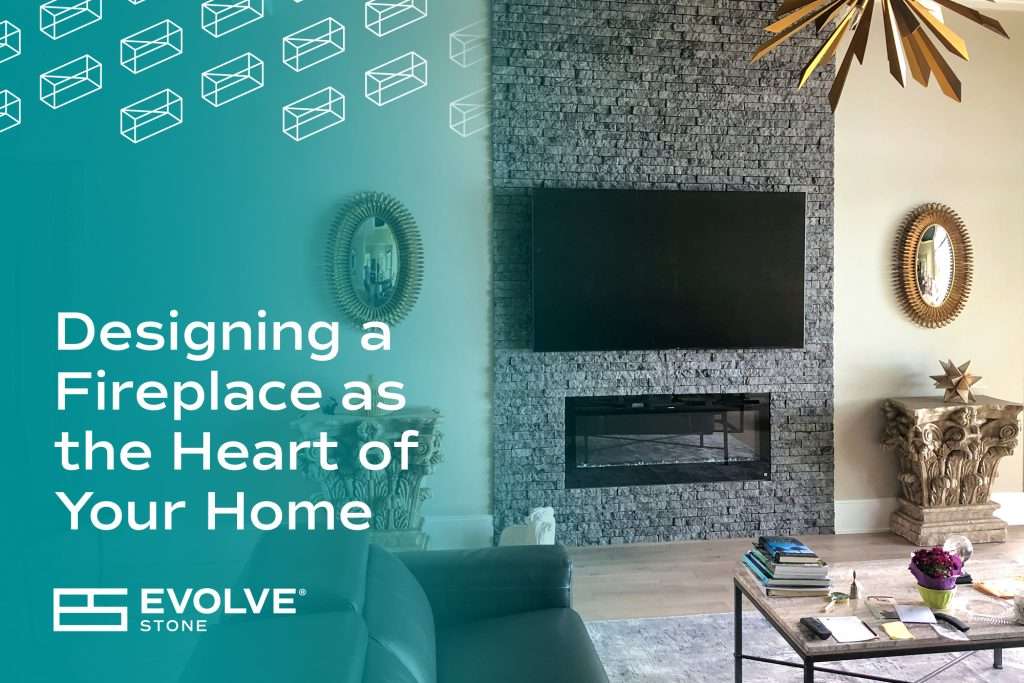
A fireplace has a natural way of drawing people together. Whether it anchors a living room, creates a cozy retreat or adds architectural interest to an open-concept space, it often becomes one of the first features people notice when they enter a room.
The materials surrounding the fireplace play an important role in determining how that focal point looks and feels. Stone can introduce texture, dimension and visual warmth while complementing styles ranging from traditional and rustic to clean and contemporary.
For homeowners looking for stone veneer fireplace ideas, the possibilities go well beyond a basic surround. Stone can stretch from floor to ceiling, frame a modern linear firebox, complement built-in cabinetry or create an entire feature wall. With the right profile, color and layout, a stone fireplace can truly become the heart of the home.
Why Stone Works So Well Around a Fireplace
Fireplaces already create a natural focal point, but adding stone can make that architectural feature even more distinctive.
Unlike a flat painted wall, stone introduces variation in texture, depth and shadow. That dimension can add interest even when the fireplace is not in use. The result is a feature that feels intentional throughout the year rather than only during colder months.
Stone is also remarkably versatile from a design standpoint. It can complement warm wood tones, dark metal accents, light cabinetry, neutral flooring and many other interior finishes. Depending on the profile and color selected, stone can feel rustic and traditional or streamlined and modern.
Today’s mortarless stone veneer also gives homeowners and professionals another option for creating the character of stone without relying on a traditional masonry installation.
7 Stone Fireplace Ideas to Inspire Your Design
There is no single formula for a great fireplace. The best design depends on the architecture of the room, the proportions of the wall and the overall style you want to create.
Here are several ways to use stone veneer around a fireplace.
1. Take the Stone from Floor to Ceiling
A floor-to-ceiling stone fireplace can transform an otherwise plain wall into a major architectural feature.
This approach works especially well in great rooms, open floor plans and spaces with vaulted ceilings. Extending the stone vertically draws the eye upward and emphasizes the height of the room.
In spaces with lower ceilings, floor-to-ceiling stone can still be effective. Choosing a lighter color palette or a more streamlined stone profile can help create visual interest without overwhelming the room.
2. Create a Clean, Modern Fireplace
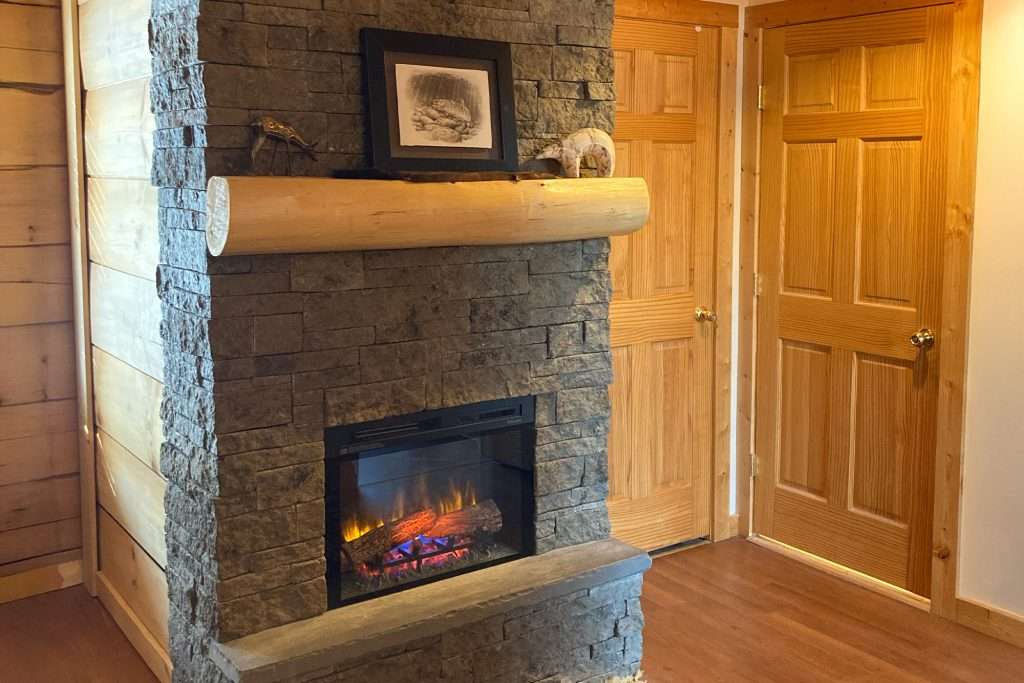
Stone does not have to mean rustic.
For a more contemporary fireplace, pair stone veneer with simple architectural lines, a linear firebox and minimal ornamentation. Cooler grays, understated neutrals and more refined stone profiles can add natural texture while maintaining a clean aesthetic.
Materials such as wood, metal, glass and concrete can also complement stone in modern interiors. The contrast between smooth surfaces and textured stone helps each material stand out.
For more inspiration, explore how stone veneer works in modern design.
3. Add Warmth to a Rustic or Transitional Space
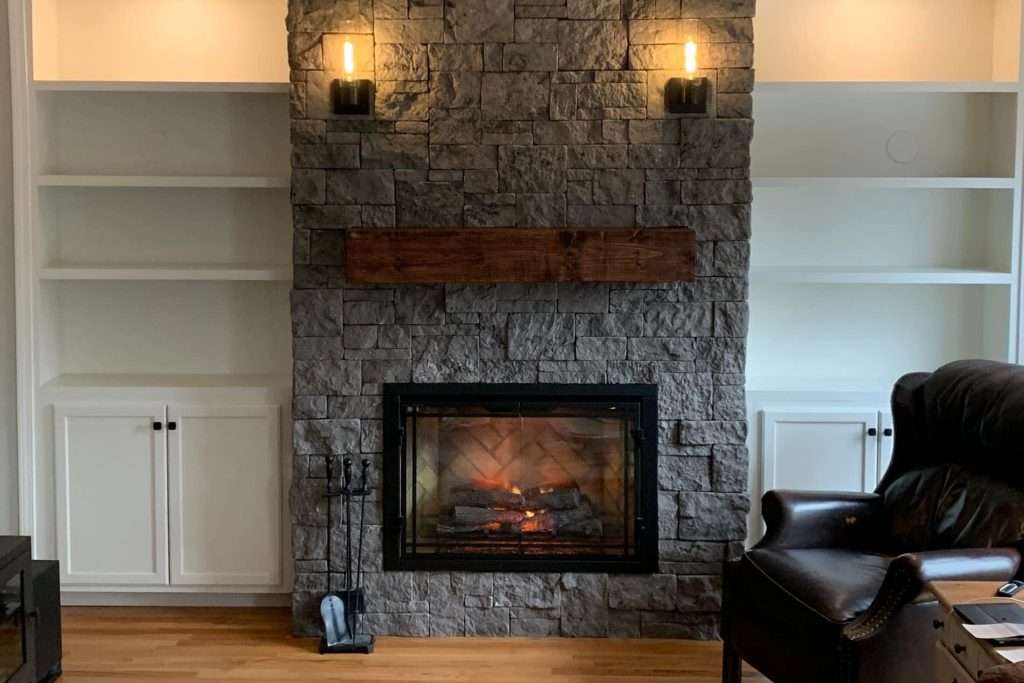
For a warmer look, combine stone with natural wood tones, exposed beams or a substantial wood mantel.
Earth-inspired colors can reinforce the cozy qualities people naturally associate with fireplaces. In transitional homes, pairing traditional stone textures with cleaner furnishings and finishes can create a balanced look that does not feel overly rustic.
The goal is to choose stone that works with the architecture rather than competes with it.
4. Extend Stone Beyond the Fireplace Surround
Instead of limiting stone to a narrow area around the firebox, consider using it across a larger portion of the wall.
Extending the material can make the fireplace feel more integrated into the architecture of the room. It can also create continuity between the fireplace, television, shelving or other features located on the same wall.
A broader stone veneer accent wall with a fireplace can be particularly effective in large living rooms where a smaller fireplace surround might feel out of proportion.
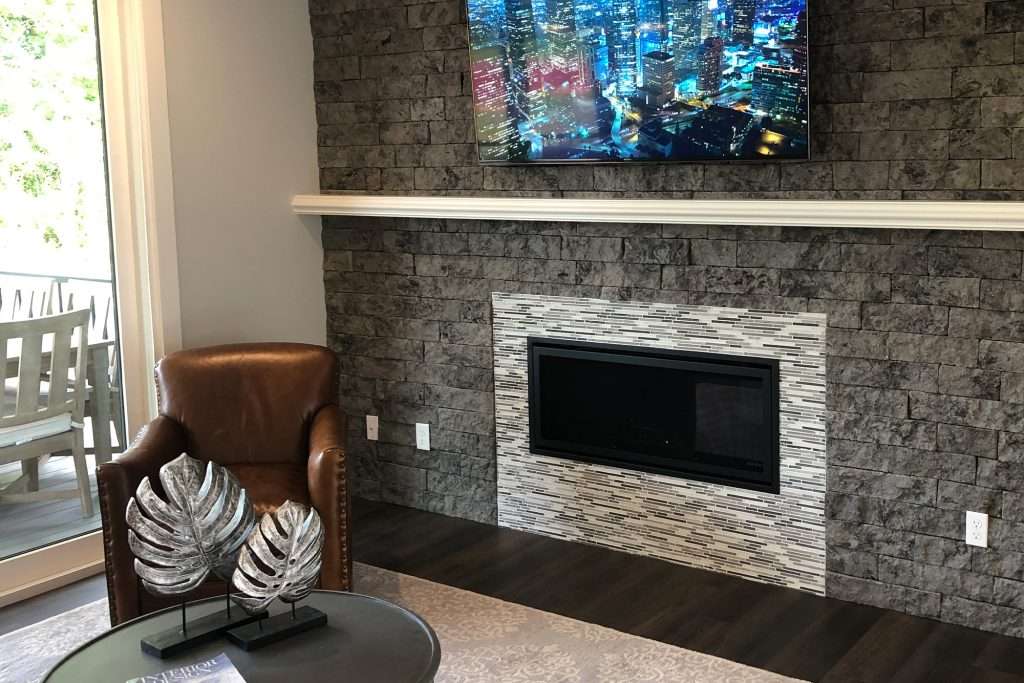
5. Frame the Fireplace with Built-Ins
Built-in cabinetry and shelving can help turn a fireplace into a complete feature wall.
Stone positioned between or alongside built-ins creates contrast between materials and gives the center of the composition additional visual weight. Light cabinetry paired with darker stone can create drama, while wood cabinetry and warmer stone tones can produce a softer, more cohesive appearance.
Consider the entire wall as a composition rather than designing the fireplace in isolation.
6. Decide Whether Your Fireplace Needs a Mantel
A mantel can completely change the character of a stone fireplace.
Traditional and transitional fireplaces often benefit from a wood or stone mantel that visually separates the firebox from the upper portion of the wall. It can also provide a natural place for artwork, décor and other personal touches.
Contemporary fireplaces may look better without one. Allowing stone to continue uninterrupted above the firebox can create a simpler, more vertical appearance.
Neither approach is inherently better. The right choice depends on the style and proportions of the room.
7. Use Stone Color and Texture to Set the Mood
Color is one of the most important decisions in any stone fireplace design.
Lighter stone can help a fireplace feel bright, relaxed and open. Darker tones can create contrast and turn the fireplace into a dramatic focal point. Warmer colors often complement wood flooring and cabinetry, while cooler neutrals can work naturally with modern interiors.
Texture matters just as much as color. A profile with pronounced variation can create a more traditional stonework appearance, while a more refined profile may better suit a modern design.
Before making a final decision, look at samples in the actual room where the stone will be installed. Natural light, artificial lighting, flooring and surrounding finishes can all affect how a color appears.
You can order Evolve Stone samples to compare options in your space.
Choosing the Right Stone Profile for Your Fireplace
The style of the stone should complement the architecture surrounding it.
Evolve Stone offers multiple profiles that can create distinctly different looks.
National True draws inspiration from classic stonework and can be a natural choice for more traditional applications.
Capital Sky features varied heights and lengths, making it versatile enough to complement both traditional and contemporary spaces.
District View incorporates natural surface textures and varied depths for a refined appearance that can work particularly well in more modern designs.
Explore the full Evolve Stone Mortarless Series to compare available profiles and colors.
It can also help to consider the architectural style of the entire home rather than selecting the fireplace material independently. Evolve Stone’s guide to matching stone veneer profiles and colors with architectural styles offers additional guidance.
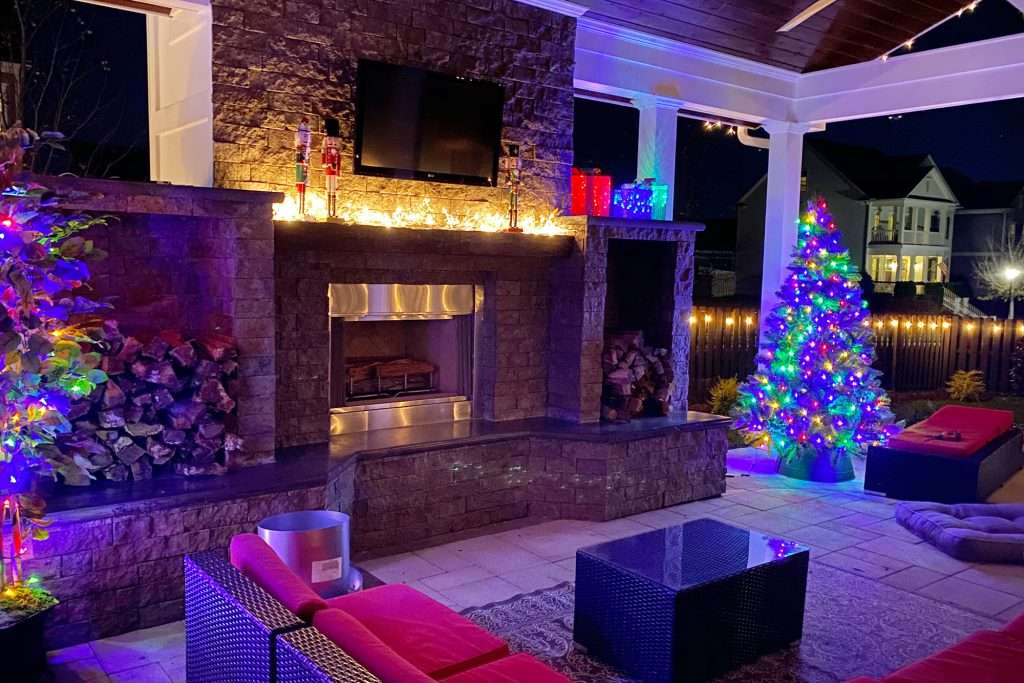
Designing Around the Firebox, Mantel and Hearth
Once you have an overall look in mind, pay attention to the details immediately surrounding the fireplace.
Consider how far the stone will extend on each side of the firebox and whether it will terminate at a mantel or continue upward. If the fireplace projects from the wall, wrapping the stone around the corners can add depth and create a more finished appearance.
The hearth is another opportunity to introduce contrast or coordinate with surrounding finishes. However, material selection in these areas is not only an aesthetic decision. Fireplace clearances and requirements vary by manufacturer and application.
Always review the fireplace manufacturer’s installation requirements before finalizing the design.
Important Fire-Rated Stone Veneer Considerations
Fireplace applications require careful attention to product specifications and required clearances.
For interior installations, Evolve Stone offers a Class B Fire-Rated version of its products. Fire-rated does not mean fireproof or noncombustible, and the material is still considered combustible.
Evolve Stone should not be installed inside the firebox or on the hearth. Fireplace manufacturer guidelines, required clearances and applicable local fire codes should always be followed when planning an installation.
For additional application and installation information, review the Evolve Stone FAQs and technical resources before beginning a fireplace project.
Why Consider Mortarless Stone Veneer for a Fireplace?
The design is only one part of a successful fireplace project. Installation can also influence material selection.
Evolve Stone is a mortarless, color-throughout manufactured stone veneer designed to install with a standard finish nailer. Its lightweight construction and nail-up installation system can eliminate many of the steps associated with traditional mortar-based stone veneer installation.
Evolve Stone can install up to 10X faster than competing stone veneer systems, which can make it particularly attractive for remodeling projects and interior feature walls where minimizing installation time and disruption matters. Its color is also infused throughout the material rather than applied only to the surface.
For homeowners interested in tackling other interior stone projects, see our guide on how to install a faux stone accent wall.
Bring Your Stone Fireplace Ideas to Life
A well-designed fireplace does more than fill an empty wall. It can establish the visual center of a room and create a place where people naturally gather.
The key is considering the entire space. Think about the scale of the wall, the height of the ceiling, the fireplace style, surrounding finishes, mantel design and how the stone’s texture and color fit with the rest of the home.
Need some inspiration? Browse the Evolve Stone Image Gallery to see stone profiles and colors in finished applications, then order samples to compare your favorites in person.
When you’re ready to move forward, find an Evolve Stone dealer or Preferred Pro near you.
FAQs About Stone Veneer Fireplaces
Yes. Stone veneer can be used to create fireplace surrounds, feature walls and floor-to-ceiling fireplace designs. When using Evolve Stone in an interior fireplace application, the appropriate Class B Fire-Rated material should be used, and all manufacturer clearance requirements and local codes should be followed.
Yes. Evolve Stone specifies its Fire-Rated material for interior applications. The Class B Fire-Rated product is resistant to flame spread but remains combustible, so required fireplace clearances still apply.
Stone veneer can be used to create a floor-to-ceiling fireplace feature when the installation complies with substrate requirements, fireplace manufacturer clearances and applicable building and fire codes. This approach can be especially effective for emphasizing tall ceilings or creating a larger architectural focal point.
No. Evolve Stone states that its material should not be installed inside the firebox or on the hearth. A suitable material should be selected for areas where noncombustible construction is required.
Modern fireplaces often work well with stone profiles that provide texture without making the design feel overly busy. Refined profiles, neutral colors, simple firebox designs and minimal mantels can help create a contemporary look. The best option ultimately depends on the architecture, lighting and surrounding finishes in the room.